Did the introduction lead to a successful result? Then it is time to formally start the coaching trajectory. The invitation phase is the official start of the coaching trajectory. In this phase, you send the invitation to officially get started. It is more than just sending a confirmation email. You complete the administrative side of the trajectory and list all practical matters, so that the coachee can start the trajectory well prepared.
How you design this invitation phase is crucial (good preparation is half the battle) for the coachee's experience. Ideally, these things can be arranged in a few clicks and are effortless for the coachee. It is an opportunity to demonstrate professionalism and strengthen trust. How? Read here.

3.1 Confirmation, overview and next steps
After the coachee confirms that he or she wants to start the trajectory, you send an invitation. In most cases, this will mean that the coachee receives an email with a confirmation, an overview of the trajectory and the next steps. In the confirmation, you describe information such as the discussed goals, practical agreements such as the duration and frequency of the sessions and a confirmation of the start date. The invitation phase is the official start of the coaching trajectory.
In order not to overwhelm the coachee with information, it is important that you make the next steps concrete and clear. For example, you can use hyperlinks that lead to the different steps such as a payment link, scheduler and the contract. You then make a template of this email, so that you can always use the same format.
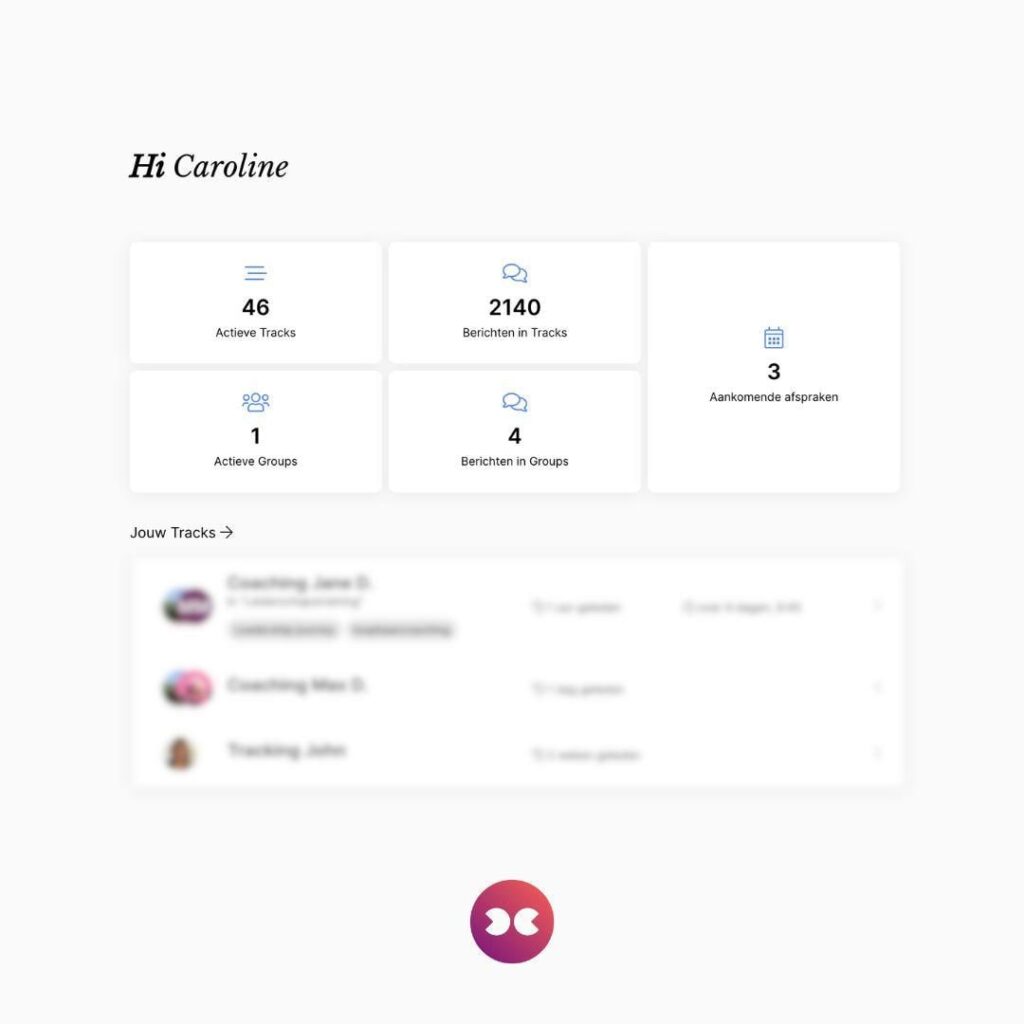
If you use a coaching platform like Trackler, the email will contain an invitation to create an account on the coaching platform. You can send this email with the personal link via your email account or you can send the coachee an invitation directly from Trackler. The email contains a personal link to the so-called 'Track': the personal development environment of the coachee. On the platform itself you can then indicate the steps that the coachee must go through before he or she can start.

3.2 Documents and agreements
First, the administrative tasks will need to be checked off. This may include signing contracts, sending invoices, and sharing any agreements on confidentiality or cancellation policies.
It is important that you make clear to the coachee what the responsibilities and agreements are. What do you offer the coachee and what do you expect from him or her? Describe this in an agreement, for example. In addition, you want to record payment conditions, possible liability and privacy conditions in a contract. One does it very formally, the other chooses an informal approach.
With regard to agreements and contracts, you can choose to draw them up and have them signed in programs such as Jotform, Typeform or Docusign. The disadvantage of this is that you send your coachee to another platform. This can also take up a lot of time if you have to manage everything manually and separately. By using a coaching software such as Trackler, you can store the contracts and all other data under one roof. This improves the user-friendliness for the coachee and saves you as a coach a lot of time.

3.3 Billing and payment arrangements
You can choose to give the coachee the option to pay per session, per term, or for the entire trajectory at once. Always make sure that you record this in the agreement, so that the agreements are clear.
Nowadays there are many different ways to send invoices. You can create an invoice in a program and send it as a PDF; you can send it via an invoicing platform or create a payment link in programs like Mollie and add it to the invitation email.
Don't want to add yet another external link? Then use a coaching platform like Trackler. Here you can keep a clear overview of all your invoices and coaching documents. In addition, you can set reminders for payments, which saves you time as a coach and ensures a clear structure in the process.
Finally: onboarding and scheduler
The invitation phase is the official start of the coaching trajectory. The next step is the onboarding. Here you share information about how you work – for example, which tools you use, whether you expect specific preparations, and how you will deal with, for example, session reports and assignments. Finally, you add a scheduler to the email, so that the coachee can schedule his or her first appointment. We will go into these two steps in more detail in the following articles.
Curious about the other phases of the coaching process? Check out here an overview of all phases.

